

Overview
Asbestos is a mineral used in building materials that is highly toxic to humans. Exposure to asbestos has been shown to cause serious diseases, including mesothelioma and other cancers.
While there are treatments for asbestos-related diseases, there is no way to cure mesothelioma. Treatment focuses on managing symptoms rather than eliminating the disease entirely. Our team of mesothelioma attorneys can help you assess your risk factors and fight for the compensation your family needs.
Contact Attorney: Laci M. Whitley
Injury: Mesothelioma due to asbestos exposure.
Defendant: Companies liable for individuals’ exposure to asbestos, including manufacturers, employers, and property owners.
Practice: Asbestos
Image by Pixabay.
Asbestos Lawsuit: Your Legal Options After a Mesothelioma Diagnosis
Injury
How does asbestos exposure occur?
When asbestos-containing materials break down over time or go through processes like grinding or sanding, they release tiny needle-like fibers. People working with these materials can then inhale the fibers, which become lodged in the lungs. Individuals who work in or live near asbestos mines or who have occupational exposure to asbestos are at higher risk of developing mesothelioma and other asbestos-related diseases.
Asbestos fibers never break down. Over many years, they can cause serious health conditions and increase mesothelioma risk. Many people develop mesothelioma decades after asbestos exposure.
What is mesothelioma?
The mesothelium is a thin layer of tissue that makes up the lining of the lungs, the chest wall, and other organs. Mesothelioma, also called malignant mesothelioma, is a rare, aggressive, and often deadly form of cancer that occurs in this tissue. While there are mesothelioma treatments, including radiation therapy, there is often no cure.
Asbestos exposure is the primary cause of mesothelioma. This can include a history of exposure to asbestos or living with someone who has been exposed to asbestos.

Image by Pixabay.
Types of malignant mesothelioma
Pleural mesothelioma
This is the most common form of mesothelioma and affects the tissue in the lungs. Symptoms include:
- Pain in the chest
- Painful cough
- Trouble breathing
- Lumps of tissue in the chest
- Wheezing
- Fatigue
- Unexplained weight loss
Cancer cells can sometimes spread from the lung tissue to the chest, causing difficulty breathing and swallowing and lung compression from buildup of fluid.
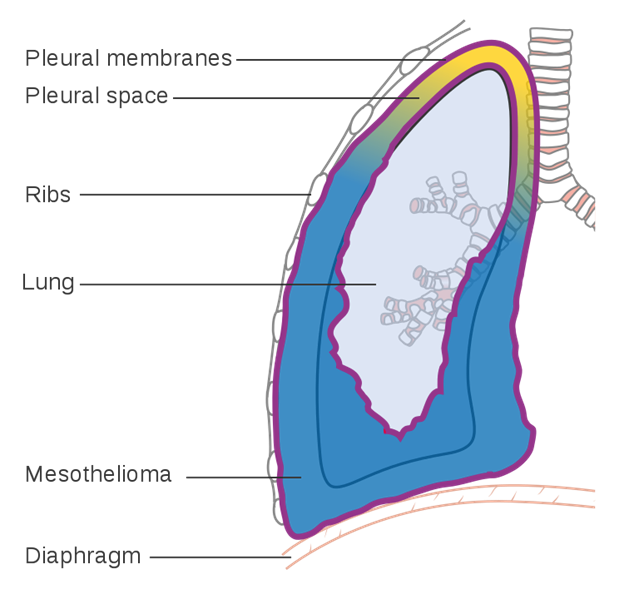
Pleural mesothelioma. Cancer Research UK uploader, CC BY-SA 4.0 via Wikimedia Commons.
Peritoneal mesothelioma
Symptoms of peritoneal mesothelioma, or mesothelioma of the abdomen, include:
- Pain and swelling in the abdomen
- Nausea
- Fatigue
- Fever
- Diarrhea
- Loss of appetite
- Unexplained weight loss
Pericardial mesothelioma
Pericardial mesothelioma affects the pericardium (the layer of tissue surrounding the heart). It is an extremely rare cancer, with only a few hundred cases ever reported.
Symptoms may include:
- Heart palpitations
- Weight loss
- Difficulty breathing
- Chest pain
- Fatigue
Plaintiff & Defendant
Asbestos was used across industries for many commercial and manufacturing purposes, including insulation, plumbing, heating, HVAC, fire retardant materials, and automotive applications. Working with these materials leads to increased risk of developing mesothelioma.
People diagnosed with mesothelioma can pursue asbestos lawsuits against companies that may have been responsible for their illness. These companies may be employers that exposed workers to asbestos on the job, owners of asbestos mines, manufacturers of products containing asbestos, or property owners whose buildings contained asbestos.
Identifying the parties responsible for asbestos-related injuries can be challenging. Our team of asbestos attorneys works with you to assess your mesothelioma diagnosis, identify sources of asbestos exposure, and fight for compensation for you and your family.

Image by Pixabay.
Landscape
Asbestos was first commercially produced for use in insulation in the late 1800s. The first medical article on the hazards of exposure was published by the British Medical Journal in 1924 and the first official diagnosis of asbestos-related lung cancer in the U.S. was made in 1935.
As awareness of the dangers of mesothelioma cases and asbestos-related cancers grew, individuals began to bring lawsuits against employers and manufacturers. The U.S. government banned most asbestos production in the 1970s, but these materials continued to be used until the early 1980s.
While asbestos manufacture, import, processing, and distribution is restricted by the Environmental Protection Agency (EPA), asbestos remains legal. Because it takes so long for mesothelioma to develop after someone is exposed to asbestos, people who worked with the material decades ago are still receiving diagnoses.
Q&A
What is mesothelioma?
Malignant mesothelioma is a rare, aggressive, and often deadly form of cancer that occurs in the tissue lining the lungs, chest wall, and other organs. While there are treatments for mesothelioma, there is no cure.
How does asbestos exposure occur?
When asbestos-containing materials break down over time or go through processes like grinding or sanding, they release tiny needle-like fibers. People exposed to these materials can then inhale the fibers, which become lodged in the lungs.

Image by Pixabay.
Why file a lawsuit over mesothelioma caused by asbestos?
A diagnosis of mesothelioma can be devastating for you and your family. Filing an asbestos exposure lawsuit makes it possible for you to receive compensation for the losses you’ve suffered, including:
- Medical expenses
- Lost wages
- Out-of-pocket costs
- Loss of earning capacity
- Pain and suffering
- Emotional distress
- Loss of enjoyment of life
Compensation from mesothelioma exposure can provide the resources your family needs to move forward. Plaintiffs can file on their own behalf, or family representatives can file a wrongful death suit on behalf of someone who died after exposure.
Contact
Our asbestos exposure and cancer mass tort lawyers are ready to help you fight for justice. If you or a loved one have been harmed due to asbestos exposure, contact Wallace Miller today to learn more about filing an asbestos lawsuit. We can be reached at (312) 634-6510 or via our online case evaluation for a free and confidential consultation.

Wallace Miller Partner Laci M. Whitley.