

Overview
Contact Attorney: Mark Miller
Injury: Parasitic battery drain and loss of connectivity services in Subaru vehicles after the phase-out of 3G networks.
Defendant: Subaru
Practice: Class Action
Latest Update: February 2026 – Hearing held on plaintiffs’ motion to amend complaint.
Subaru drivers filed a motion to amend the complaint in July 2025 to add additional allegations relating to Subaru’s conduct after the initial complaint was filed. The parties appeared before Judge Christine O’Hearn on February 25, 2026, and plaintiffs are optimistic that the judge will allow their claims to proceed.
Photo by Pixabay
Case Team
Principal Attorney: Mark Miller
Supporting Attorney: Julia Ozello
Principal Paralegal: Susane Marangoni Molina
Was Your Subaru Vehicle Impacted by the 3G Phase-Out? Learn More About Your Legal Options
Plaintiffs in a class action against Subaru allege that equipment in their cars that relied on 3G stopped working when the technology was phased out for 4G and 5G, in turn draining their vehicles’ batteries much faster than normal. Filed in 2023, the lawsuit claims that drivers would not have bought or leased their vehicles had they known about the connectivity and parasitic battery drain issues.
Injury
3G services in Subaru vehicles
Many models of Subaru vehicles released from 2016 to 2019 relied on 3G for safety features and connectivity functions. Using 3G, the Subaru STARLINK system connected to the internet to provide services including:
- Automatic collision notification
- Enhanced roadside assistance
- An emergency assistance button
- A stolen vehicle locator
- Bluetooth hands-free calling
However, as early as 2009, telecommunications companies started phasing out 3G for 4G (and later 5G) services. The class action lawsuit alleges that even though Subaru was aware of the shift away from 3G, they not only continued to sell 3G-only vehicles but also failed to make them adaptable to new wireless technologies.
As a result, when most major wireless carriers phased out 3G in 2022, many Subaru drivers were unable to use their vehicle’s connectivity functions. While Subaru offered upgrades to vehicles with STARLINK Safety and Security Subscriptions, this only addressed about 14% of affected vehicles. For other vehicles, the 3G system was built such that it was difficult or impossible to upgrade.
In addition to losing 3G connectivity, many of these vehicles suffer from parasitic battery drain. The STARLINK system continued to attempt to access nonexistent 3G networks, using up power more quickly. This has led to serious safety issues, including vehicles failing to start.
What vehicles are impacted by cutoffs in 3G services and parasitic battery drain?
Many Subaru models produced from 2016 to 2019 included the STARLINK system and 3G-only connectivity. These models include:
- Subaru Forester, 2016-2019
- Subaru Legacy, 2016-2019
- Subaru Outback, 2016-2019
- Subaru Impreza, 2016-2019
- Subaru Crosstrek, 2016-2019
- Subaru WRX, 2016-2019
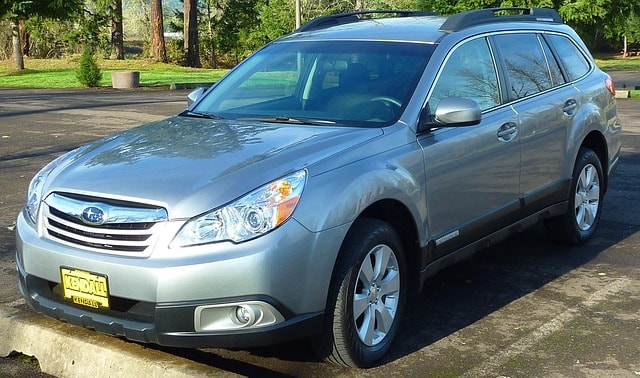
Photo by Pixabay
Plaintiff & Defendant
Subaru sued in class action lawsuit
Subaru is a Japanese automotive corporation that operates in the U.S. out of New Jersey. The company began making cars in 1954 and entered the U.S. market in 1968 as Subaru of America. In 2023, Subaru of America sold more than 630,000 cars across the U.S.
Filed in 2023, the class action lawsuit against the company alleges that Subaru vehicles from model years 2016 through 2019 relied on 3G services that became unavailable when wireless carriers phased out 3G. Individuals are eligible to join the class action if they purchased or leased one of the cars affected by obsolete 3G technology.
Landscape
The Subaru class action is filed in the District Court of New Jersey before Judge Christine P. O’Hearn. Plaintiffs are seeking financial compensation from Subaru on the grounds that the company promised them vehicle features that stopped working after 3G was phased out.
Plaintiffs allege that the corporation could have instituted a fix for the 3G issues in advance, but didn’t do so in order to cut costs. If drivers had known about the connectivity problems, they would not have paid as much for their cars. As a result, the suit claims that drivers were overcharged for vehicles that did not live up to what the manufacturer promised.
Photo by Pixabay
Timeline
February 2026 – Hearing held on plaintiffs’ motion to amend complaint.
Subaru drivers filed a motion to amend the complaint in July 2025 to add additional allegations relating to Subaru’s conduct after the initial complaint was filed. The parties appeared before Judge Christine O’Hearn on February 25, 2026, and plaintiffs are optimistic that the judge will allow their claims to proceed.
October 2023 — Class action lawsuit filed against Subaru over 3G connection access.
Subaru drivers have filed a lawsuit against the company alleging that the phase-out of 3G networks affected their continued access to connectivity and safety features.
2022 — Major wireless carriers including Verizon and AT&T phase out their 3G networks.
2019 — AT&T announces its plan to sunset its 3G network.
2015 — Subaru starts implementing 4G.
Subaru starts implementing 4G LTE connectivity in some vehicles while still selling vehicles with 3G connectivity only.
2010 — Verizon launches its 4G LTE service, the first large-scale network of its kind.
2010 — Subaru announces that some of its vehicles will have 3G connectivity that will allow them to connect wirelessly to the internet.
2009 — Telia Sonera becomes the first carrier in the world to offer 4G services.
Contact
The Wallace Miller team is dedicated to fighting for consumer rights across the U.S. The lawyers, paralegals, and legal assistants on the Subaru 3G lawsuit are proud to advocate for our clients and will continue to pursue justice and compensation for all plaintiffs involved in the class action lawsuit.