

Overview
This content was reviewed by Matthew J. Goldstein, Esq.
Contact Attorney: Matthew J. Goldstein
Injury: Fraud committed via the sale of replacement engines that emit illegal levels of pollution
Defendant: Mitsubishi Heavy Industries, Inc. and its subsidiaries
Practice: Class Action
Latest Update: August 2025 – Mitsubishi lawsuit filed.
Plaintiff files a lawsuit against Mitsubishi alleging that it violated federal regulations and deceived consumers.

Image by art7live from Pixabay.
Case Team
Principal Attorney: Matthew J. Goldstein
Supporting Attorney: Jacob Podell
Principal Paralegal: Susane Marangoni Molina
Supporting Paralegal: Mirena Fontana
Mitsubishi Emissions Lawsuit: Fisherman Alleges Company Sold Illegal Marine Engines
In a newly filed lawsuit, a Seattle fisherman alleges that Mitsubishi violated EPA regulations, lied to customers, and committed fraud in its policy for selling replacement marine engines.
Our team of fraud and environmental attorneys is dedicated to standing up for consumers against corporations that try to violate their rights. If you have been sold a replacement marine engine by Mitsubishi, call our office at (331) 425-8022 or fill out our online questionnaire to speak with our team.
Injury
Seattle fisherman files lawsuit against Mitsubishi
The plaintiff in the recently filed lawsuit is the owner and operator of a fishing vessel near Seattle. After the ship’s marine engine started failing in late 2019, he went to the engine dealership for repairs. The dealership claimed that repair of the engine wasn’t feasible and told the plaintiff he would need to pay for a new engine.
Dealership employees then told the plaintiff that it would sell him a Tier 3 Mitsubishi engine that complied with U.S. environmental regulations and provided him with documentation for that engine. However, without the customer’s knowledge, the dealership installed a less valuable, noncompliant Tier 1 engine instead. Mitsubishi claimed it had used “good engineering judgment,” a legal standard for selecting an appropriate replacement engine, to conclude that the dirtier Tier 1 engine was the only engine that could be installed on the fisherman’s vessel.
In addition to violating federal law, the Tier 1 engine had lower horsepower than the previous engine. Because the vessel’s existing propeller was too big for the new engine, it caused overheating, and the plaintiff was forced to replace the propeller with a smaller model at extra cost. The engine also did not physically fit the ship, despite the dealership’s claims, and the fisherman had to modify an oil pan made for trucks to use on the vessel.

Mitsubishi Motors headquarters. Tokumeigakarinoaoshima, CC0, via Wikimedia Commons.
Mitsubishi’s pattern of deceptive engine replacement practices
The complaint claims that the egregious conduct by Mitsubishi is part of a larger effort to defraud customers and avoid EPA regulations. In the new lawsuit against the manufacturer, the plaintiff alleges that Mitsubishi routinely made up justifications and altered the facts to install their own lower-tier engines when there were no scientific or practical reasons to do so.
In order to avoid time and expense, Mitsubishi did not conduct “good engineering judgment” evaluations or investigate whether other higher-tier engines would work as replacements. A frequent excuse it would claim was that all higher-tier engines were incompatible with the vessel’s cooling system. The replacement-engine rule is intended to be a rare exemption, but Mitsubishi used that excuse to install hundreds of lower-tier replacement engines.
Licensed manufacturers are required to identify and install engines that fit the vessel and have the highest tier rating—even if those engines are made by another manufacturer. However, the plaintiff alleges that the company uses boilerplate responses and other tactics to avoid referring clients to competitors for their cleaner engines.
Mitsubishi designed this system to avoid regulation, skip the time-consuming process of evaluation, and sell their noncompliant engines as quickly as possible. As a result, the lawsuit claims, Mitsubishi Heavy Industries, Inc. and its subsidiaries violated U.S. environmental law and defrauded hundreds or even thousands of customers.
Plaintiff & Defendant
As of February 10, 2026, an amended complaint has been filed in Washington federal court.
Read the Amended Complaint.
Who are the defendants?
Best known as a Japanese automaker, Mitsubishi Heavy Industries is a a multinational corporation based in Tokyo, Japan. Operating globally across many industries, it sells its products in all 50 states via its American branches. Mitsubishi manufactures cars, ships, marine engines, heavy machinery, and other products. Its competitors include Caterpillar, GE, and Cummins. Its subsidiaries, Mitsubishi Heavy Industries Engine & Turbocharged, Ltd. and Mitsubishi Turbocharged & Engine America are also named in the lawsuit.
The complaint also named Hatton Marine & Industrial Repair, the dealership that sold the plaintiff’s engine, as a defendant. A Washington corporation, Hatton distributes parts for diesel engines and installs marine engines.

Mitsubishi Heavy Industries, Ltd., CC BY 2.5, via Wikimedia Commons.
Plaintiff seeks class action against Mitsubishi Heavy Industries
The plaintiff in the lawsuit against Mitsubishi alleges that the company lied to and misled consumers as part of a scheme to sell replacement engines that emitted illegal levels of pollution. that the company defrauded hundreds or even thousands of consumers of Mitsubishi marine engines and plans to ask for certification of a class-action lawsuit.
While the lawsuit specifically addresses events in 2019, it is likely that this scheme goes back at least as far as 2013. The plaintiff is seeking to create a nationwide class of people who were sold Mitsubishi marine engines that were not in the highest tier of EPA regulations, with subclasses for people in the state of Washington and people sold engines by Hatton.
Landscape
The United States Environmental Protection Agency
The U.S. Environmental Protection Agency (EPA) works to limit pollution and reduce risk to humans and the environment.
As part of that effort, the organization conducts emissions tests and regulates many elements of commercial vessels and vessels used for transport, including gas usage, mileage, miles per gallon, air pollution, emissions, and engine replacement procedures. These regulations apply to engines made in or imported to the U.S. for use in land and sea transportation vehicles.
Over several decades, the EPA has developed emissions standards for heavy and industrial engines and vehicles that operate off-road.
Understanding the tier system for marine engine emissions
Engine replacements and repairs play an important role in pollution caused by marine vessels, and so the procedures of replacing parts on ships is strictly regulated. Engines are divided into “tiers,” which set their levels of emissions.
The lowest standard, Tier 1, was established in 1994. Tiers 2, 3, and 4 each have stricter standards for emissions tests. Tier 4 is the standard for current engines and has the lowest levels of allowable pollutants. Manufacturers who work in or import to the U.S. must produce and sell only Tier 3 or 4 engines, depending on the circumstances, and anyone replacing their marine engine must go through a licensed repair company, like Mitsubishi.
However, sometimes these companies are allowed to sell lower-tier engines when replacing an old engine. This is legally permitted only when the engines certified to current standards don’t have the physical or performance characteristics needed to power the marine vessel.
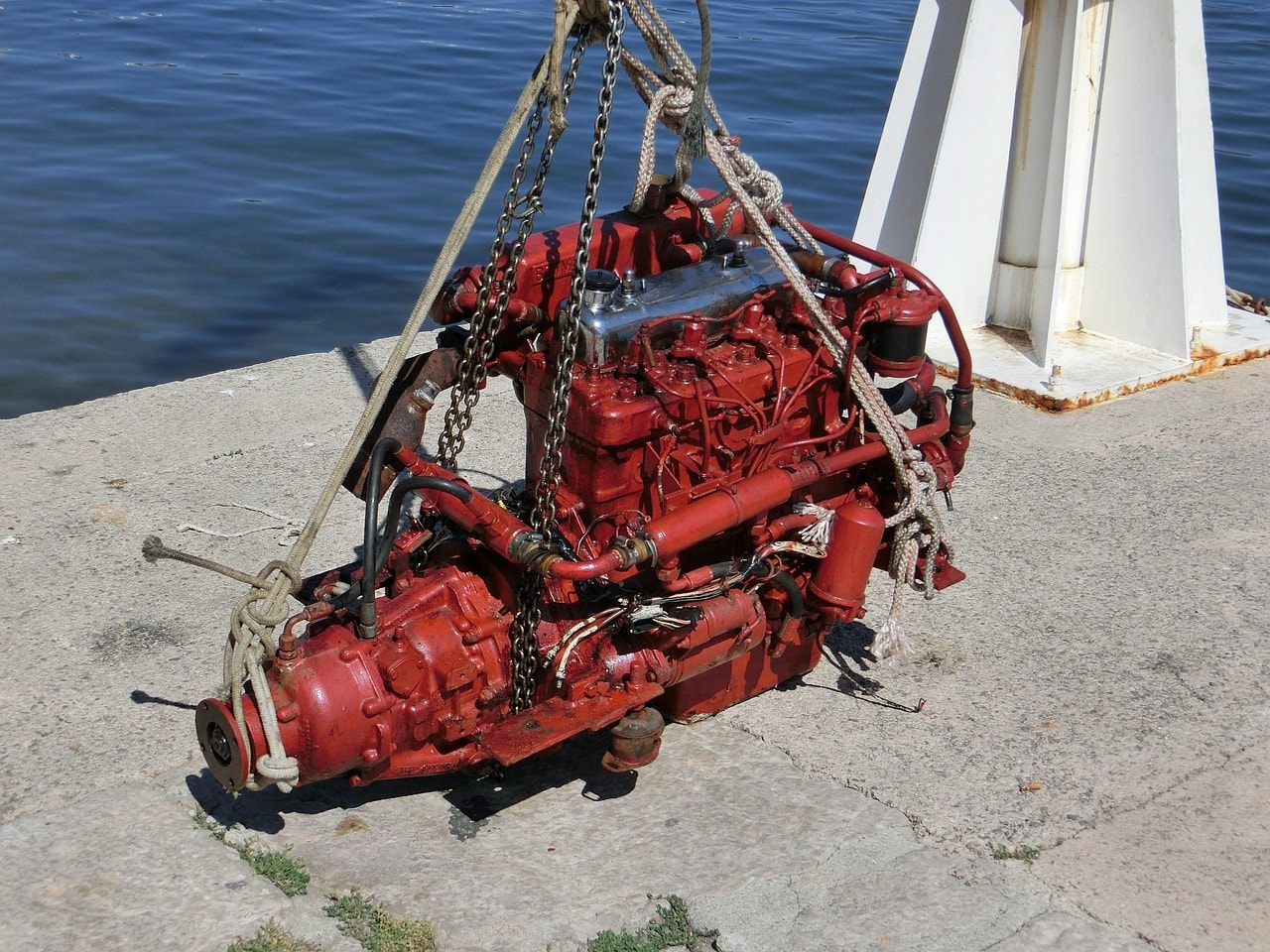
Image by Mike Ljung from Pixabay.
An engine might not fit the vessel’s characteristics if it:
- Weighs too much for the vessel
- Does not physically fit the vessel
- Is incompatible with other major components of the vessel
In these situations, the manufacturer must assess all available engines to find the one that is compatible with the vessel and has the cleanest possible emissions—even if it’s sold by a competitor. The manufacturer can only supply a lower-tier engine if it determines that there are no engines by any manufacturer that both:
- Meet current emissions standards, and
- Have the physical and performance requirements needed to power the vessel.
The manufacturer is legally required to use “good engineering judgment” to determine if a lower-tier engine is appropriate. Using this method, the company must assess all available information on the current engine as well as accepted scientific and engineering principles. They must also provide a report to the EPA every year detailing how many new replacement engines of each tier they have provided and the specific reasoning behind each replacement.
While this is a time-consuming and expensive process for the manufacturing company and can lead to delays in the authorization of replacement engines, it provides the manufacturer with the data they need to accurately recommend and provide the cleanest engine to use. After this process, the manufacturer will deliver the engine and work with the shipyard and body shop to replace the part in the vessel.

Image by Christo Anestev from Pixabay.
The environmental impact of noncompliant engines
Vessel emissions have a significant impact on air pollution in the areas around ports and rivers, as well as human health and global climate change. Commercial harbor vessels that use older engines release 162 times more diesel particulate matter than a five-year-old school bus.
The engine tiers introduced by the EPA cut down dramatically on these emissions, with a 96% reduction in and particulate matter released into the atmosphere between Tier 1 and Tier 4 engines. Tier 4 is also significantly better than Tier 3, with the new engines resulting in a 64% reduction in greenhouse gas emissions for many large engines.
Timeline
August 2025 — Mitsubishi lawsuit filed.
Plaintiff files a lawsuit against Mitsubishi alleging that it violated federal regulations and deceived consumers.
November 2019 — Plaintiff receives noncompliant marine engine.
The engine dealership installs an engine noncompliant with EPA regulations without the plaintiff’s knowledge.
2013 — Plaintiff alleges Mitsubishi’s scheme may date back to 2013.
According to the complaint, Mitsubishi’s deceptive scheme may go back as far as 2013.
2008 — EPA introduces Tier 4 emissions standards.
The United States Environmental Protection Agency (EPA) introduces Tier 4 emissions standards for marine vessels.
1994 — The EPA institutes the first federal emissions standard for nonroad heavy and industrial engines, now known as Tier 1.
Image by Daniel Kirsch from Pixabay.
Q&A
What is the Mitsubishi marine engine lawsuit?
The plaintiff in the lawsuit against Mitsubishi alleges that the company lied to customers as part of a scheme to sell replacement engines that emit illegal levels of pollution. They allege that the company defrauded hundreds or even thousands of consumers.
What is the impact of noncompliant marine engines?
Marine vessel emissions have a significant impact on pollution in the areas around ports and rivers, and increase risks to human health and global climate change. Older engines produce dramatically more emissions than newer engines—commercial harbor vessels that use old engines release 162 times more diesel particulate matter than a five-year-old school bus.
What are the EPA rules for engine tiers?
Federal regulations divide marine engines into tiers by their engine type and production year. Tiers 3 and 4 are the standards for current engines and have the lowest levels of pollutants. Manufacturers who work in or import to the unless the “good engineering judgment” exception applies.
In these situations, the manufacturer must use “good engineering judgment” to determine if a lower-tier engine is necessary. Through this method, the company assesses scientific and engineering principles as well as all available information on the current engine. It must recommend the cleanest compatible engine—even if that engine is made by a competitor.
Contact
Work with Wallace Miller
Our team of fraud and environmental attorneys is dedicated to pursuing justice for consumers who have been taken advantage of by corporations. If you were sold a replacement marine engine by Mitsubishi, you may be able to join the potential class action lawsuit.
The system of federal regulations is complicated, and the details of environmental laws can be confusing and unclear. Our team will collect the details of your situation, investigate potential fraud committed by Mitsubishi, gather statements from expert witnesses, and put together a strong case for your compensation. We will take care of all case preparation and present the strongest possible case.
Questions about your Mitsubishi marine engine? Reach out to our team at (331) 425-8022 or fill out our online questionnaire for more information.

Left to right: Timothy E. Jackson, Nicholas P. Kelly, Molly Condon Wells, Matthew J. Goldstein, Jessica Wieczorkiewicz, Mark R. Miller, Edward A. Wallace.